
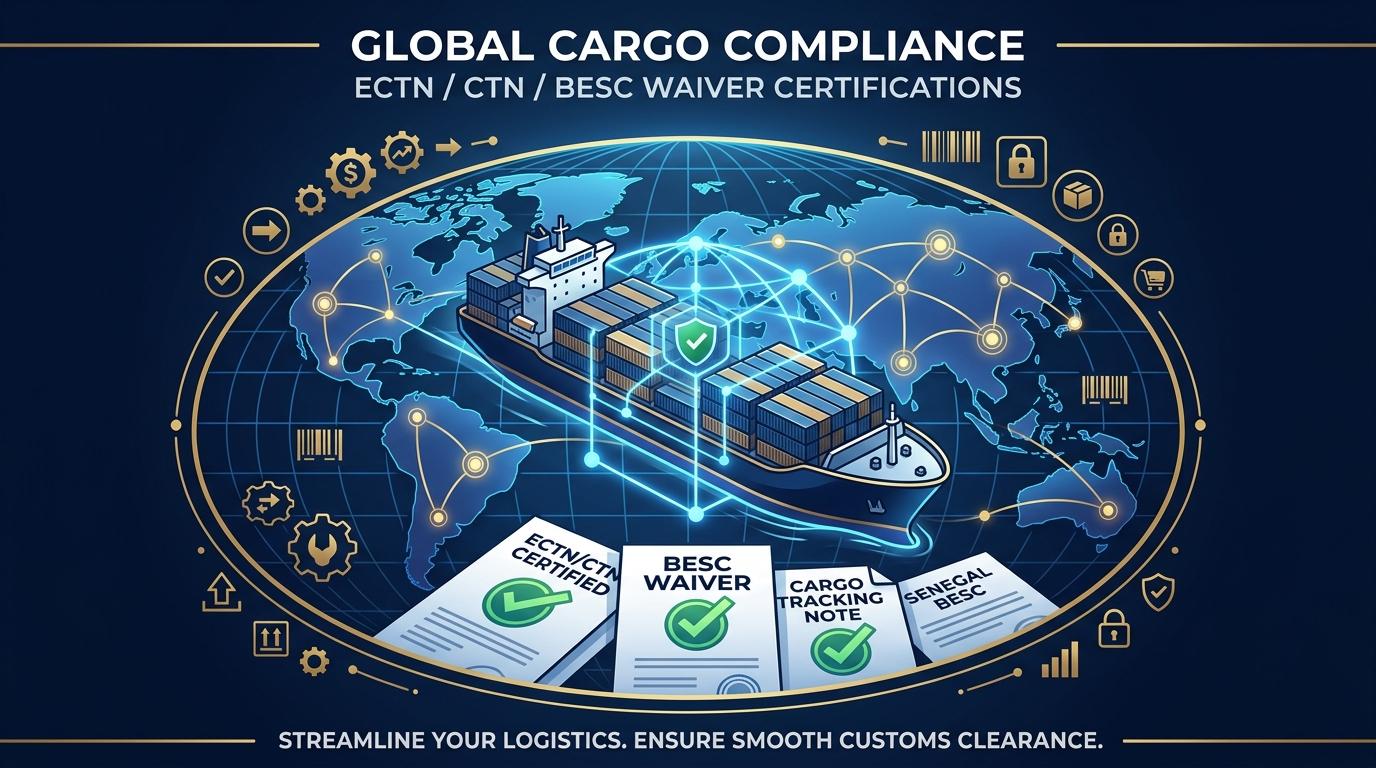
What is a waiver certificate?
A waiver certificate is a loading document that helps clear cargo easily and overcome time-consuming customs enforcement procedures smoothly. Despite its intimidating name, it's a standard shipping requirement rather than a legal waiver.
The waiver for the shipping industry includes:
- Information on all involved parties
- Values and descriptions of goods
- Volume of goods
- Shipping information
- Other relevant cargo details
It enables Customs Authorities to observe, control, and manage import traffic effortlessly.
What else is the waiver certificate called?
The waiver certificate goes by several names depending on the region:
Which shipments need a waiver certificate?
This requirement is mandatory mainly for West African countries and some Central African nations. It applies regardless of shipment type—sea, air, or road shipments—covering bulk, breakbulk, Ro/Ro, container, groupage, general cargo, and even diplomatic cargoes.
How do you obtain a waiver certificate?
The process is straightforward. You need to provide required documents via email:
- Bill of Lading
- Commercial Invoice
- Freight Invoice
Note: Required documents may vary by destination country.