
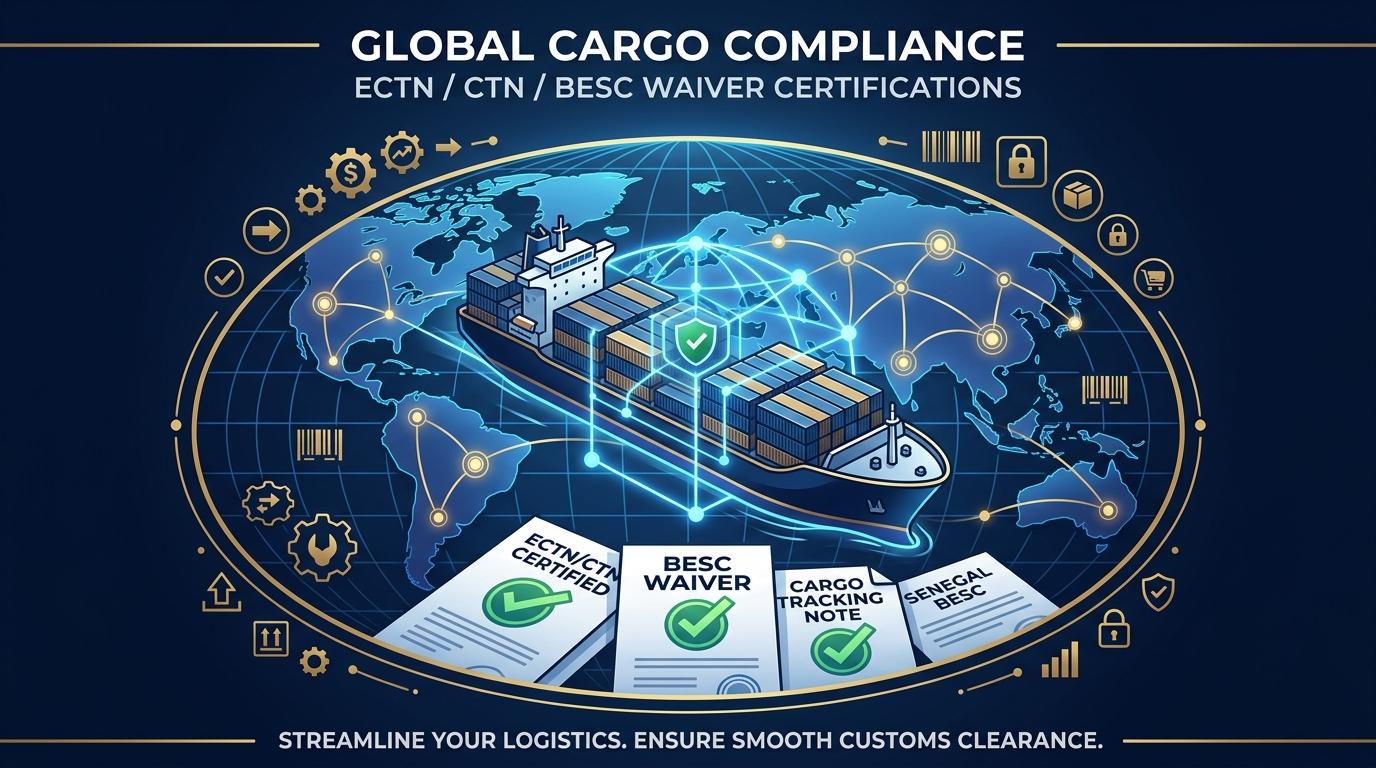
What is an ECTN Certificate?
The Electronic Cargo Tracking Note (ECTN), also known as BESC, is a mandatory document required for shipping goods to several African countries. It contains detailed information about the shipment, including exporter and importer details, cargo description, and shipping route. The ECTN ensures that all imports comply with destination country regulations and facilitates efficient cargo tracking.
Why is the ECTN Certificate Important?
Obtaining an ECTN certificate is crucial for:
- Regulatory Compliance: Ensures adherence to import regulations of the destination country, preventing legal issues and fines
- Efficient Customs Clearance: Facilitates faster processing at ports, reducing delays and associated costs
- Enhanced Cargo Tracking: Provides authorities with detailed shipment information, aiding in monitoring and security
Which Countries Require an ECTN Certificate?
Several African countries mandate the ECTN certificate for imports, including Angola, Benin, Burkina Faso, Burundi, Cameroon, Central African Republic, Djibouti, Democratic Republic of the Congo, Egypt, Equatorial Guinea, Gabon, Guinea Bissau, Guinea Conakry, Ivory Coast, Liberia, Madagascar, Mali, Niger, Chad, Republic of Congo, Senegal, Sierra Leone, Somalia, South Sudan, Togo, and Yemen.
How to Obtain an ECTN Certificate
Gather Required Documents
- Bill of Lading
- Commercial Invoice
- Freight Invoice (if applicable)
- Packing List (if required)
- Export Customs Declaration (if required)
- Certificate of Origin (if required)
Application Steps
- Choose an authorized agent or certified service provider
- Provide collected documents to the agent for verification
- Pay applicable fees (vary by destination country and shipment details)
- Receive the ECTN certificate upon approval for inclusion in shipping documentation
Consequences of Not Having an ECTN Certificate
Failure to obtain an ECTN certificate can lead to:
- Delays in Cargo Clearance: Shipments held at destination port until compliance is achieved
- Financial Penalties: Fines imposed for non-compliance with import regulations
- Increased Costs: Additional charges such as demurrage and storage fees accumulating due to delays
Conclusion
Understanding and obtaining the ECTN certificate is vital for exporters shipping goods to certain African countries. Ensuring compliance facilitates smooth customs clearance and enhances the security and efficiency of shipping operations.