
What is an ECTN (Electronic Cargo Tracking Note)?
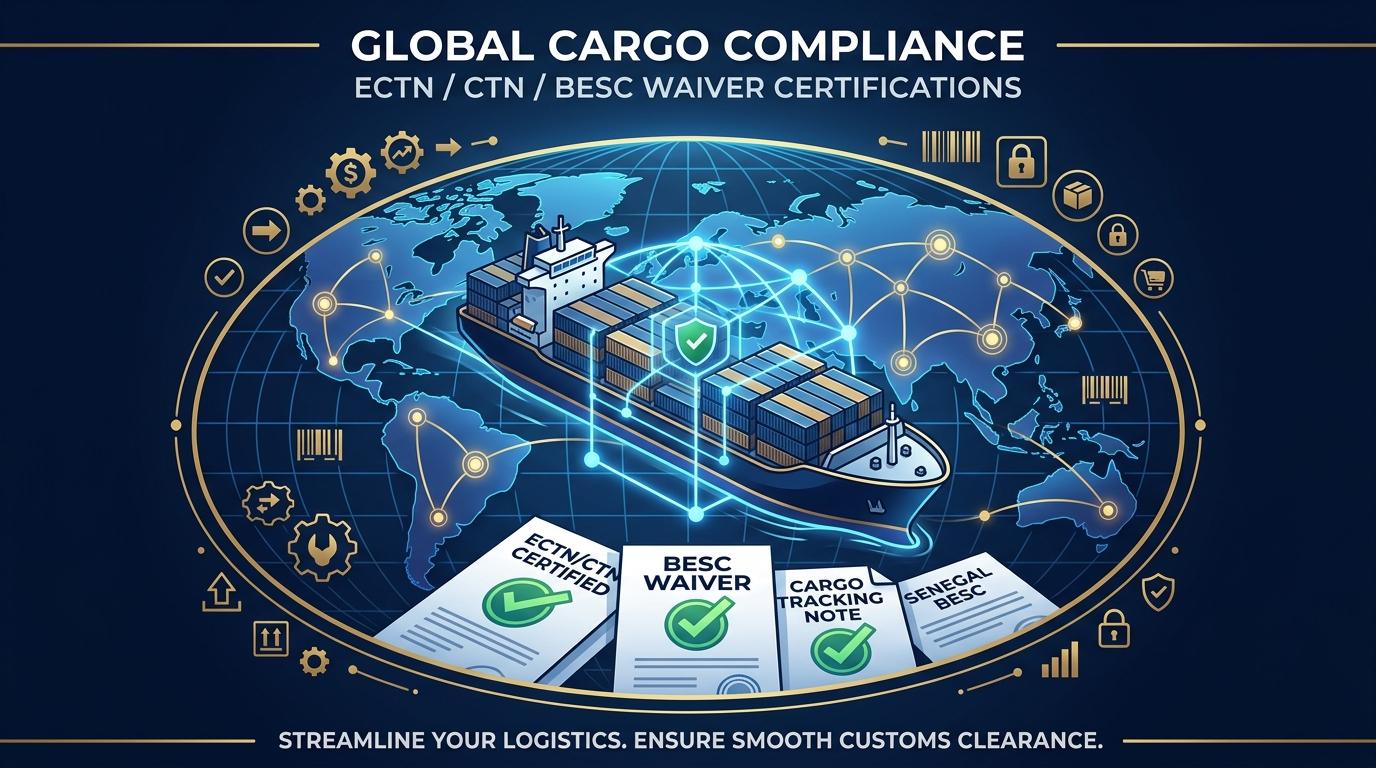
The Electronic Cargo Tracking Note (ECTN) is an electronic document that monitors the movement of goods during international shipments. It is particularly mandatory for imports and exports to and from several countries, primarily in Africa. The ECTN enables customs authorities, shipping companies, and importers/exporters to track cargo from departure to final destination, ensuring regulatory compliance and enhancing security during transit.
Unlike traditional paper-based tracking notes, the ECTN streamlines the process by digitizing cargo tracking, making updates and management faster and more efficient.
Why is the ECTN Important?
The ECTN serves multiple critical purposes in international trade:
Enhanced Security and Monitoring — Real-time tracking improves cargo security by detecting unusual activity, tampering, or misrouting before escalation, ensuring shipment integrity and reducing theft or fraud risk.
Faster Customs Clearance — The ECTN acts as a pre-clearance document, allowing faster and smoother customs entry. Without it, shipments could face delays, penalties, or rejection.
Improved Trade Compliance — The ECTN guarantees that shipments meet the safety, health, and environmental standards required by destination countries.
Transparency and Accountability — Detailed and traceable shipment records enhance transparency, allowing real-time tracking and quick resolution of discrepancies.
Reduction in Administrative Errors — Automated processes minimize human error, ensuring correct information flows between all parties.
How Does the ECTN Work?
Registration with an ECTN Service Provider
Exporters, shippers, or freight forwarders must register with a certified ECTN service provider. These platforms are authorized by governments or international shipping bodies to issue electronic cargo tracking notes.
Submission of Shipment Details
Submit transportation documents such as the Bill of Lading, Commercial Invoice, and Freight Invoice.
Issuance of the ECTN
Once shipment details are verified, the ECTN is issued electronically. This digital document contains unique identification codes, such as shipment number, vessel name, and port information, and is sent to all involved parties.
Real-Time Tracking and Monitoring
Throughout transit, the ECTN system enables real-time cargo tracking. Both importers/exporters and authorities can access the system to monitor status, location, and regulatory compliance.
Customs Clearance at Destination
Upon arrival at the destination port, the ECTN is submitted to customs for clearance. Authorities verify tracking details against the shipment, and goods are cleared for entry if everything is in order.
Countries That Require the ECTN
Although the ECTN system originated in Africa, it is increasingly becoming a standard requirement for global shipments. Key countries and regions requiring the ECTN include numerous African nations spanning West, Central, and East Africa, including Angola, Benin, Burkina Faso, Burundi, Cameroon, Central African Republic, Djibouti, Democratic Republic of the Congo, Egypt, Equatorial Guinea, Gabon, Guinea Bissau, Guinea Conakry, Ivory Coast, Liberia, Madagascar, Mali, Niger, Chad, Republic of Congo, Senegal, Sierra Leone, Somalia, South Sudan, Togo, and Yemen.
How to Ensure ECTN Compliance
Know the Requirements — Check whether your shipment requires an ECTN, as each country has different regulations.
Choose the Right ECTN Provider — Partner with a reliable and authorized ECTN service provider to ensure accuracy and compliance.
Complete Documentation — Ensure all shipment details are correct when submitting your ECTN application, as missing or incorrect information can cause delays.
Plan Ahead — Apply for the ECTN well in advance of the shipment's departure to avoid last-minute complications.
Conclusion
The Electronic Cargo Tracking Note (ECTN) is an essential tool in modernizing international trade. By streamlining cargo tracking, enhancing security, and ensuring compliance, the ECTN significantly improves the efficiency of global logistics operations. For businesses shipping to and from countries requiring the ECTN, understanding the process and maintaining compliance is critical for smooth cross-border goods movement.