
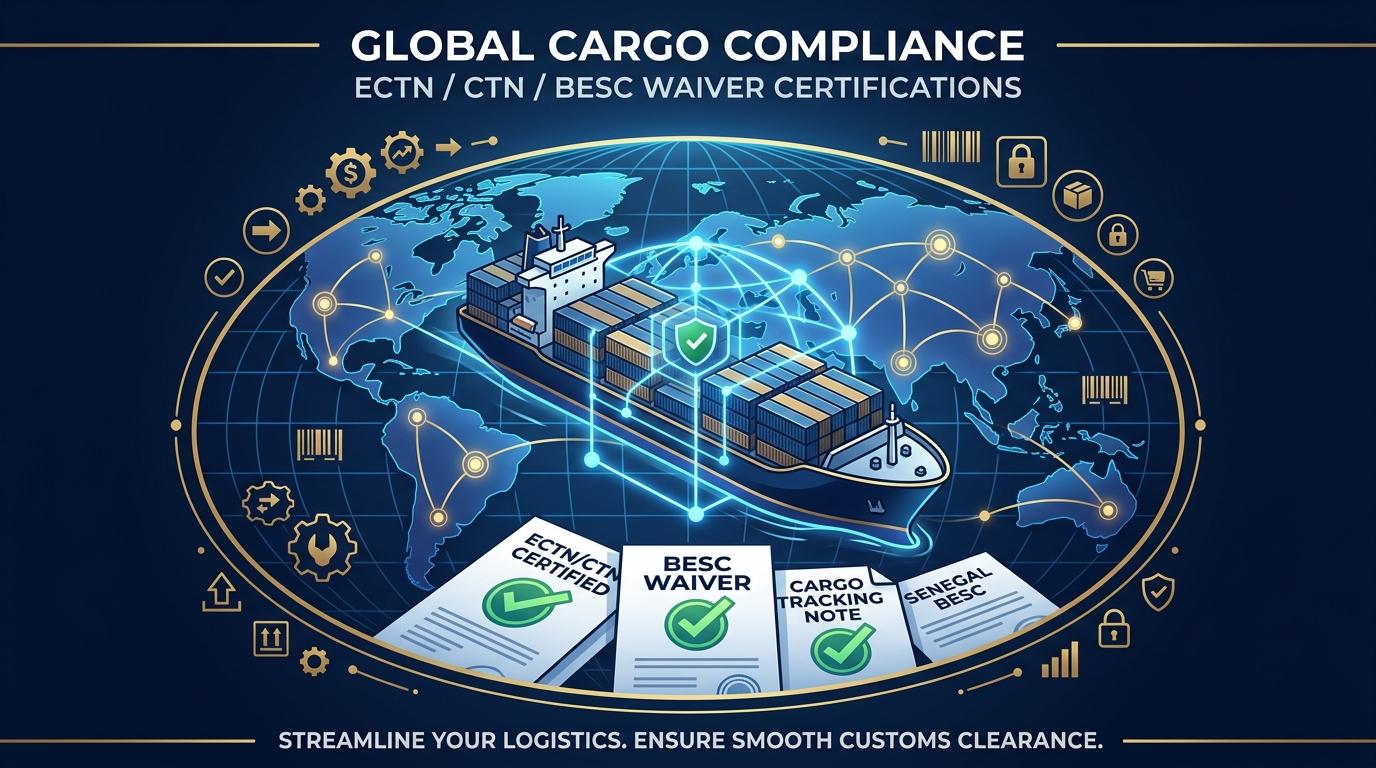
Understanding the ECTN System
The Electronic Cargo Tracking Note, also known as the Electronic Cargo Tracking Document (ECTD) in some regions, represents a digital evolution in cargo documentation. This system serves as a mandatory transport document that tracks cargo from its port of loading to its final destination, providing real-time information about shipment status and handling.
Which Countries Require an ECTN Certificate?
Several African countries mandate the ECTN certificate for imports, including Angola, Benin, Burkina Faso, Burundi, Cameroon, Central African Republic, Djibouti, the Democratic Republic of the Congo, Egypt, Equatorial Guinea, Gabon, Guinea Bissau, Guinea Conakry, Ivory Coast, Liberia, Madagascar, Mali, Niger, Chad, Republic of Congo, Senegal, Sierra Leone, Somalia, South Sudan, Togo and Yemen.
It's essential to verify the specific requirements of the destination country before shipping.
Core Benefits to African Development
Enhanced Revenue Collection
The implementation of ECTN systems has demonstrated considerable success in improving customs revenue collection. By digitizing cargo documentation, governments can better track and monitor incoming shipments, leading to more accurate tax assessment and collection.
Improved Maritime Security
Maritime security enhancement is a key achievement of the ECTN system. The system provides authorities with advance information about vessel movements and cargo contents, enabling sophisticated risk assessment and management.
Trade Facilitation and Efficiency
One of the most significant impacts of the ECTN system is its role in optimizing port operations and processing times. By digitalizing documentation processes, the system creates streamlined procedures in African ports. Faster processing times translate directly into cost savings for businesses and more efficient trade flows.
Data-Driven Decision Making
The implementation of ECTN creates valuable databases of trade information that empower policy decisions and infrastructure development. This data enables governments and port authorities to optimize resources and make strategic investments in port infrastructure and capacity.
Regional Integration and Standardization
The adoption of ECTN systems across different African nations promotes regional integration by standardizing cargo documentation processes. This standardization facilitates seamless cross-border trade and supports the objectives of the African Continental Free Trade Area (AfCFTA) agreement.
Technological Infrastructure Development
The implementation of ECTN systems has spurred investment in digital infrastructure across participating nations. This technological advancement extends beyond ports, contributing to the broader digital transformation of African economies and creating new opportunities in the technology sector.
Future Prospects
Digital Innovation
The system provides a foundation for continued technological innovation in trade and logistics. As the system evolves, it will incorporate new technologies and capabilities, further enhancing trade efficiency and economic growth.
Economic Opportunities
ECTN implementation creates new business opportunities in technology services, training, and support industries. This expansion of the digital economy supports job creation and economic diversification.
Global Trade Integration
The system positions African nations to participate more effectively in global trade, attracting international investment and fostering economic partnerships.
Conclusion
The ECTN system represents a significant step forward in modernizing Africa's trade infrastructure. Its implementation aligns perfectly with broader development goals, including improving governance, enhancing revenue collection, and promoting regional integration. As more African nations adopt and refine these systems, the positive impacts on trade efficiency and economic development continue to multiply.