
Introduction
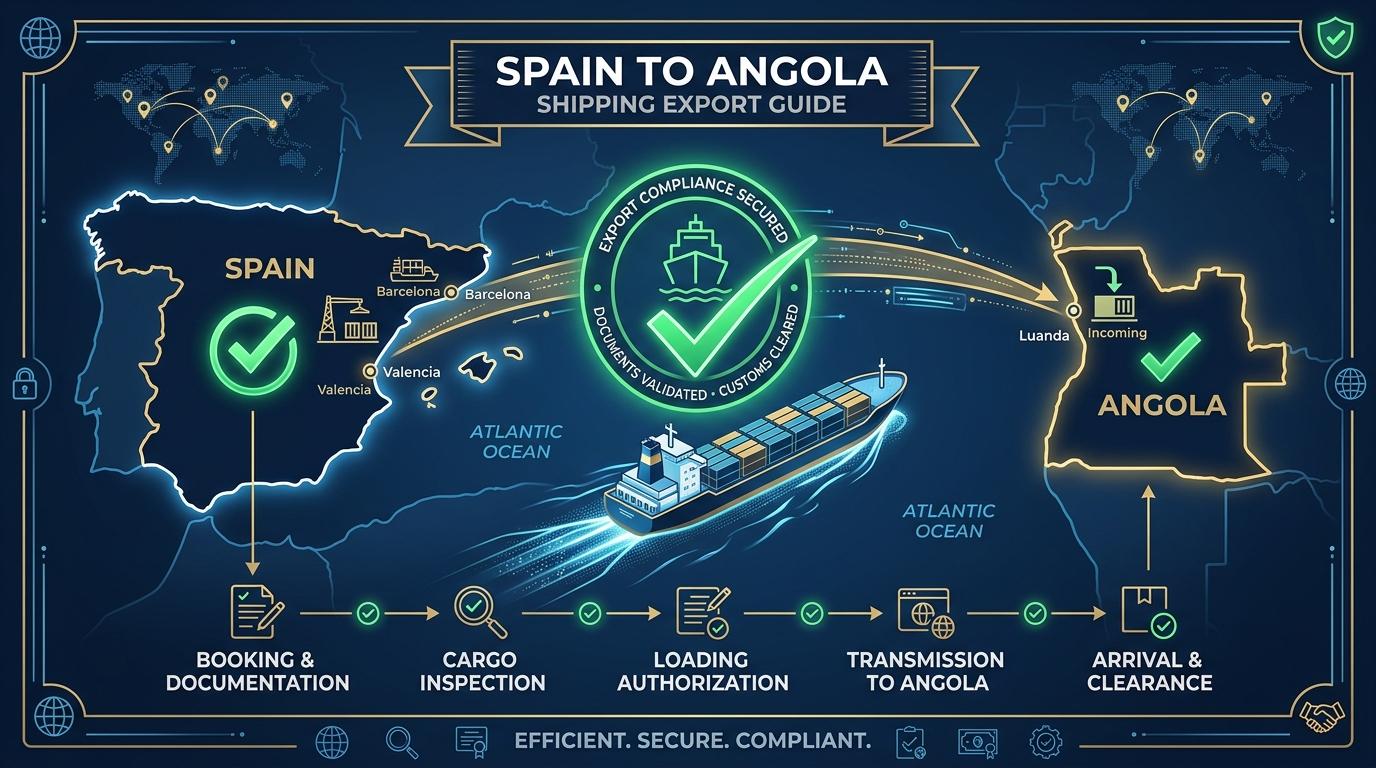
Following numerous inquiries about exporting to Angola, this guide helps new exporters navigate their first international transaction. The process involves multiple steps, from selecting a freight forwarder to managing documentation and logistics.
Freight Forwarder
Your first step is contacting a freight forwarding company specializing in international shipping. They assess your situation and guide you through the process.
Key attributes to seek in a freight forwarder:
- Good reputation
- Sufficient experience
- Strong network of connections
- Appropriate services (documentation, logistics)
- Transparent pricing with no hidden surprises
Take time to verify their background and contact references before committing.
Required Documents to Export
Check with Spain's Chamber of Commerce (Cámara de Comercio) for specific requirements. You'll typically need:
Proforma Invoice
A quote document for the importer to arrange financing and import licenses, containing:
- Buyer and seller details
- Detailed goods description
- Harmonized System classification
- Price and payment terms
- Delivery details and costs
- Currency used
Commercial Invoice
Prepared once the importer approves the proforma invoice. It mirrors the proforma but adds order number, payment information, and marine insurance details.
Packing List
A detailed product inventory used by the freight forwarder to create the bill of lading and for customs clearance.
Certificate of Origin
Identifies the country of origin and requires a chamber of commerce stamp (for a fee).
Documento Único
Angola's import license. It's exempt if cargo clears under Temporary Regime or if FOB value is below $5,000 USD.
Angolan Loading Certificate (ARCCLA)
Required by Angola (also called CTN or BESC). Required documents include:
- Bill of lading
- Commercial invoice
- Freight invoice
- Documento Único
Apply for ARCCLA as soon as documentation is ready. It's mandatory and must be validated at least 5 days before cargo arrival to avoid fines and delays. What the waiting looks like once the documents are in is set out in a single Angola ARCCLA application followed from request to validation.
Shipper's Letter of Instruction (SLI)
Contains all information for moving goods, including responsible parties and contacts. Provide to your freight forwarder with a Power of Attorney if needed.
Additional Documents
Your freight forwarder handles:
- Delivery notes
- Forwarders Cargo Receipt
- Shipping instructions for bill of lading
- Marine insurance
- Cargo inspection certificates
The shipping line/carrier provides:
- Bill of lading
- Manifest
- Freight invoice
- Loading list
- Stowage plans
Key Considerations
Incoterms
Three-letter codes establishing transaction rules, determining responsibility for shipment, maritime transport, and cargo liability transfer.
Options include:
- CIF/CFR: Safest, least risky
- EXW/FOB: Cheaper, more risky
Consult your freight forwarder about which incoterm fits your contract.
Marine Insurance
Usually not included in standard freight agreements. Costs approximately 1% of cargo value and covers damage according to your policy. Coverage doesn't include weather hazards, piracy, or conflicts.
Cargo Inspection
Importers may require inspection by SGS, Intertek, or similar agencies to verify product quality. Inspection certificates must accompany shipping documents.
Logistics
If your cargo doesn't fill a full container (FCL), consider LCL (less than container load) and sharing container space with other exporters to reduce costs. Your freight forwarder can assist.
Spanish Ports and Transit Times
Valencia
Spain's most important Mediterranean port with weekly Angola service.
- Transit time: 22 days
- Destination: Luanda
- Main carriers: CMA CGM, Hapag-Lloyd, Maersk, MOL, MSC, ZIM
- Route type: No direct service; transit stops available
Algeciras
Recommended for peninsula exports.
- Transit time: 14–19 days
- Destination: Lobito port
- Main carriers: CMA CGM, MSC, Maersk
Las Palmas
Fastest option from the Canary Islands.
- Transit time: 13–16 days
- Main carriers: CMA CGM, Maersk
Transit times are estimates; customs clearance and ship transfers may cause delays.
Summary Checklist
- Contact a freight forwarder and chamber of commerce
- Gather all required documentation
- Choose an incoterm
- Arrange marine insurance
- Plan shipment logistics
Remember that experienced companies familiar with various cargo types provide valuable guidance throughout the export process.