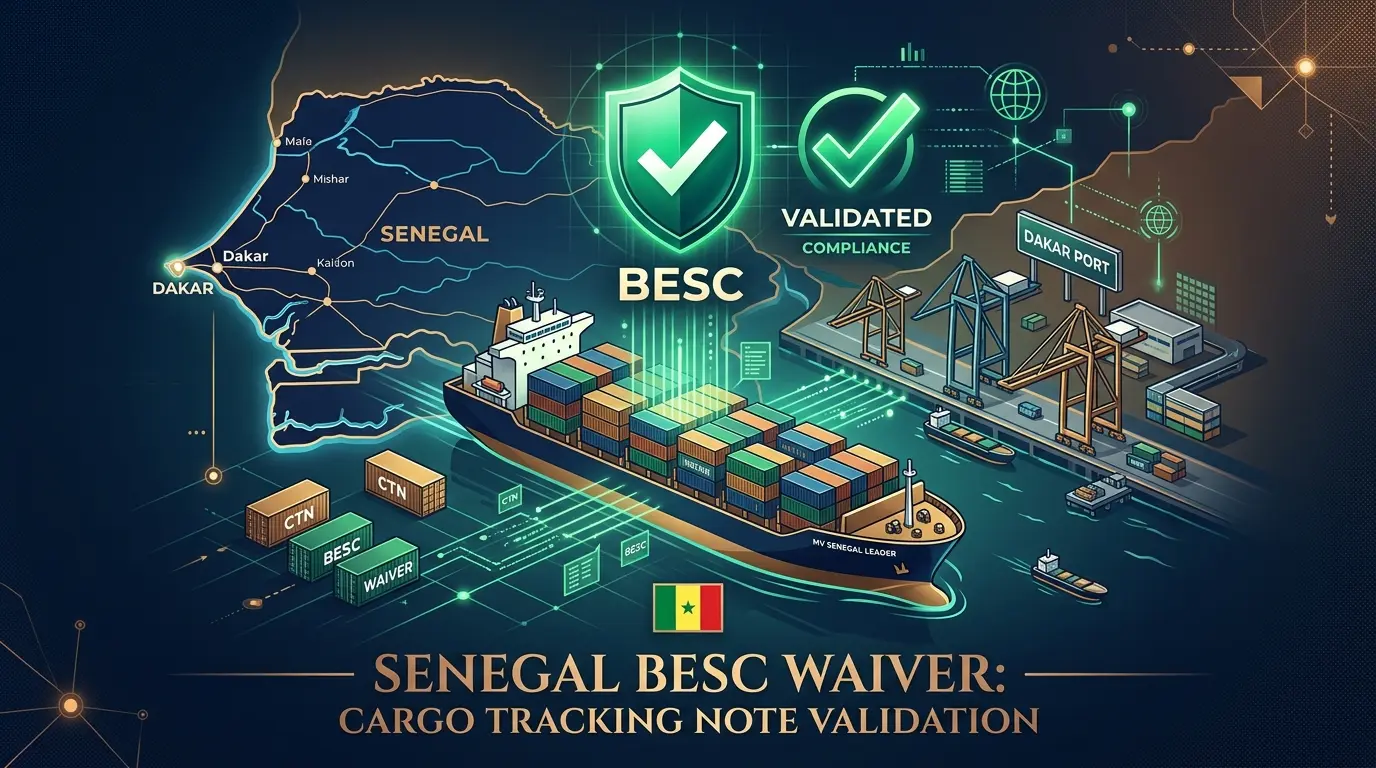
Shipping Lines Have Warned Against Shipment Without Senegal BSC
Following directives from Senegal Marine Customs Authorities, major shipping lines have issued formal warnings to exporters regarding cargo documentation requirements.
The Enforcement Policy
Shipping line associations including CMA CGM, Maersk, and ONE implemented strict BSC policies starting March 1, 2019. While the BSC requirement (also known as the BSC certificate) dates back to 2008, enforcement was previously lenient.
Consequences of Non-Compliance
Historically, shipping lines did not rigorously inspect for certificates before loading containers. This leniency resulted in exporters incurring substantial penalties and storage charges upon cargo unloading in Senegal.
Current Requirements
- All containers require validated BSC and BSC certificates before loading
- The Cargo Tracking Note must cover each commodity item on the cargo manifest and bill of lading
- Transit shipments via Senegal are exempt from BSC regulations
- Non-compliance results in consignment denial of boarding
- All BSC charges and related costs remain the shipper's responsibility
Key Takeaway
Senegal BSC compliance is now mandatory for all shipments to avoid operational and financial consequences.
Official sources
Official Senegal BSC sources
The Senegal BSC was created by Interministerial Order No. 04350 of 26 May 2008 and is validated by the Senegalese Shippers’ Council (COSEC).
- Journal Officiel de la République du Sénégal: order on the cargo tracking note (BSC)
- Conseil Sénégalais des Chargeurs (COSEC)
accessed
Top 3 causes of Senegal BSC rejection
- Commercial Invoice value does not match the insurance certificates.
- Bill of Lading lacks the mandatory BSC number annotation.
- Shipper and consignee addresses do not match corporate registry records.
Case study: Senegal BSC after vessel arrival at Dakar: a real case
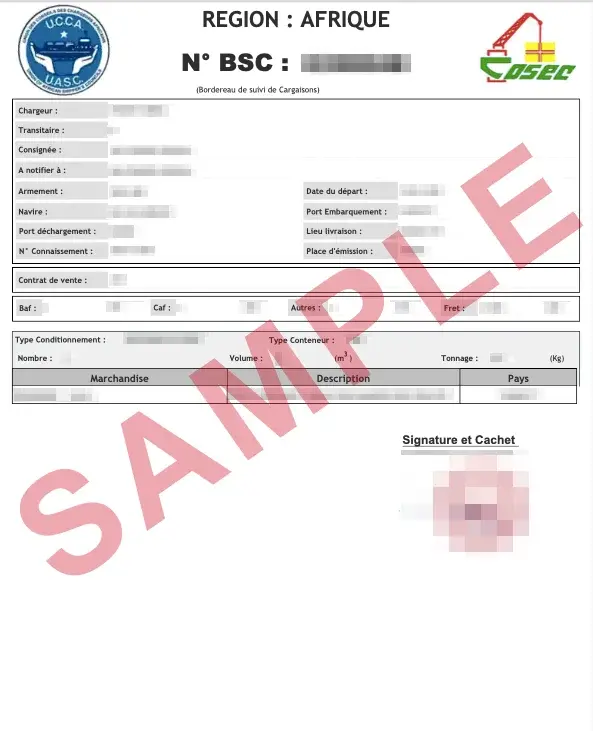
Official BSC Document Sample
Verify the layout, stamps, and BSC customs format of a validated Senegal loading certificate: