
Overview
The ECTN (Electronic Cargo Tracking Note) is a mandatory customs requirement for sea shipments discharging at the Port of Djibouti. Because Djibouti is the primary maritime gateway for landlocked Ethiopia, the ECTN is used by customs and the port authority to track cargo, shipper, consignee and declared values ahead of clearance, whether the goods clear in Djibouti or move on in transit. The ECTN must be obtained by the shipper or freight forwarder and validated in good time — the exact cut-off depends on the route. A missing, expired or incorrect ECTN at Djibouti typically causes customs clearance delays, storage and demurrage charges, and regulatory fines until a valid certificate is provided.
Discharge ports
Required documents
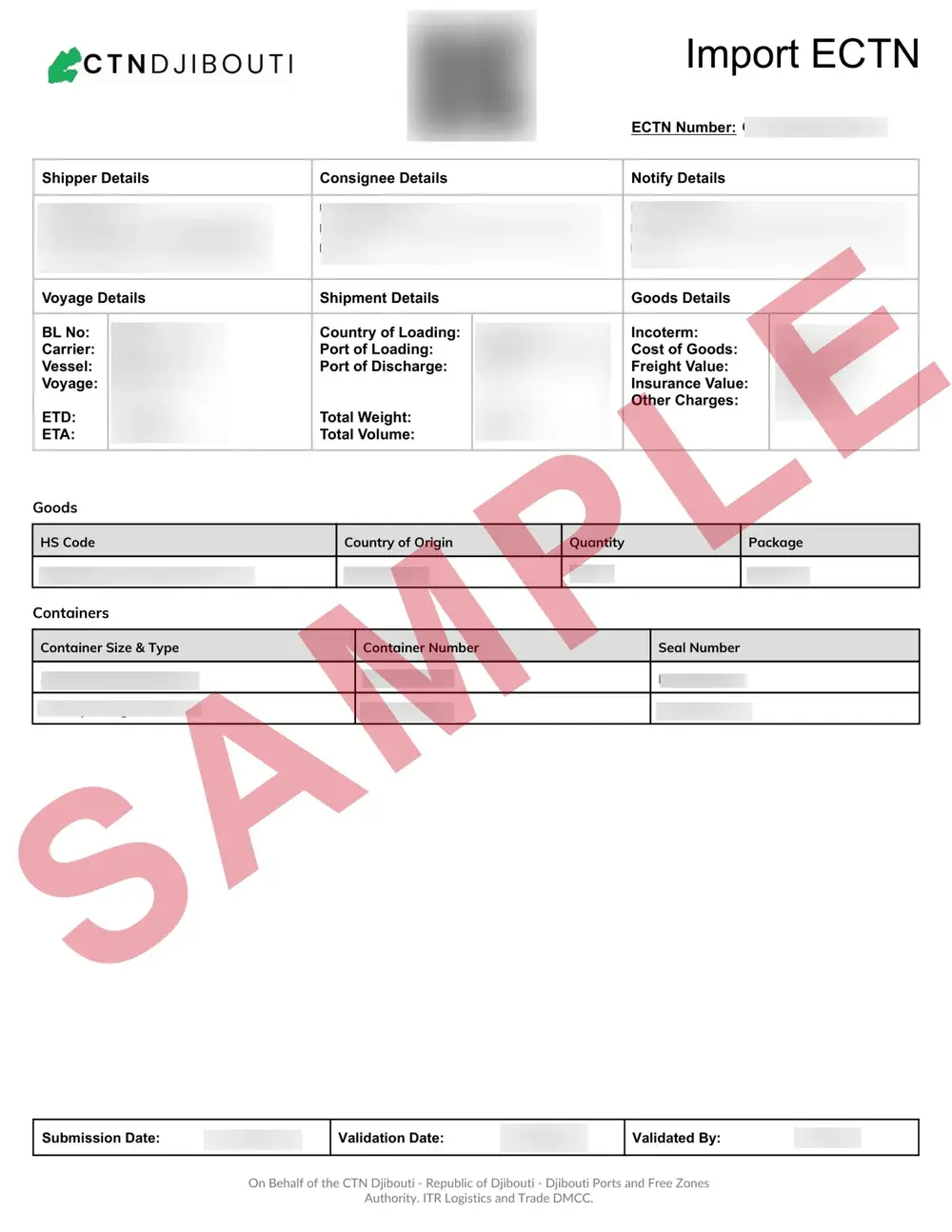
Official ECTN Document Sample
Verify the layout, stamps, and ARCCLA customs format of a validated Djibouti loading certificate:
Application process
- 1The shipper or freight forwarder applies for the Djibouti ECTN in good time; the exact cut-off depends on the route, whether before departure or before arrival.
- 2Prepare the Bill of Lading and Commercial Invoice for validation.
- 3Our compliance desk cross-checks the shipper, consignee and cargo details against destination requirements.
- 4The ECTN number is issued and must accompany the shipment for clearance at the Port of Djibouti (including Ethiopia-bound transit cargo).
- 5File early to avoid post-arrival penalties and demurrage at one of the region's busiest transit hubs.
Timeline
| Step | Duration |
|---|---|
| Submit documents | Your action |
| Draft & invoice | 1 hour on average |
| Approve draft | Your action |
| Payment | Your action |
| Final validation | a few hours |
Special rules & HS codes
Ethiopia-bound transit cargo
Because most Ethiopian imports transit through the Port of Djibouti, cargo moving on to Ethiopia is generally covered by the Djibouti ECTN requirement. We confirm the exact scope for your route before you file.
Frequently asked questions
Ready to get your ECTN?
Send your Bill of Lading and get your draft certificate today — fast, transparent, compliant.