
Data Analysis
Ghana's imports have steadily increased annually since 1995, reaching US$13.075 billion in 2018. The trade balance favored Ghana after 2010, with exports overtaking imports by narrow margins.
The top import products by value are:
- Non-Crude Oil (US$1.8 billion)
- Passenger Vehicles (US$1.5 billion)
- Electronic appliances (US$1.1 billion)
Since 2016, these three commodity groups have accounted for over 30% of total import value.
Leading Supply Markets
China dominates Ghana's import supply chain, holding a market share approaching 20%—greater than the next three suppliers combined. The United States, Belgium, and India round out the top suppliers.
Prohibited to Import Ghana
Shippers must familiarize themselves with Ghana's import restrictions:
- Raw coffee
- Defamatory or demoralizing printed materials
- Counterfeit products
- Toxic wastes
- Used refrigerators and freezers
- Dangerous weapons
- Banned drugs
- Gambling devices
- Ivory
- Pornography materials
- Precious metals and stones
Prohibited cargo faces confiscation and potential prosecution.
Role of Technology
Smart Containers
"Seaborne freight containers equipped with sensors provide real-time tracking of location and movements." This enables customs authorities to assess content security without physical inspection.
ICUMS System
Ghana's Integrated Customs Management System replaced previous documentation requirements (SPN, IDF, CCVR, PAARS).
Clearance steps:
- Importer engages a licensed customs broker with ICUMS access
- System calculates import duty using predetermined benchmark values
- All local fees are paid (shipping admin charges, THC, documentation, customs, delivery fees)
Must-Have Documentations
Ghana SPN Certificate
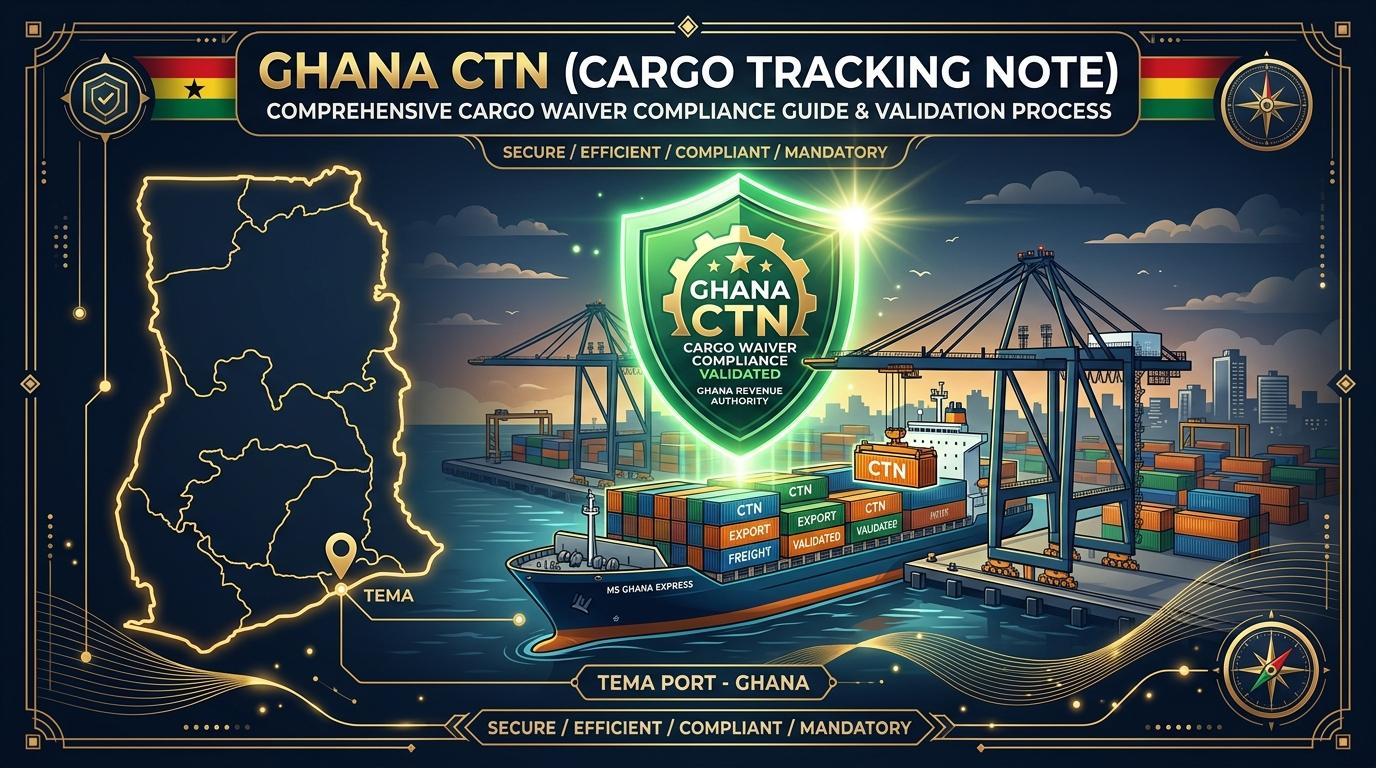
Implemented in 2018, the Cargo Tracking Note system enabled pre-arrival cargo information submission. However, Ghana Customs Authority terminated SPN requirements in August 2020, replacing it with ICUMS. Shippers waived SPN requirements in late 2019.
SGS Certificate
A compulsory document integrated with customs management systems, supporting import/export processes while improving compliance with international trade requirements.
Certificate of Conformity
Required to accompany all Ghana shipments as a pre-shipment inspection document. Exporters may present manufacturer certificates to avoid additional inspection costs.