

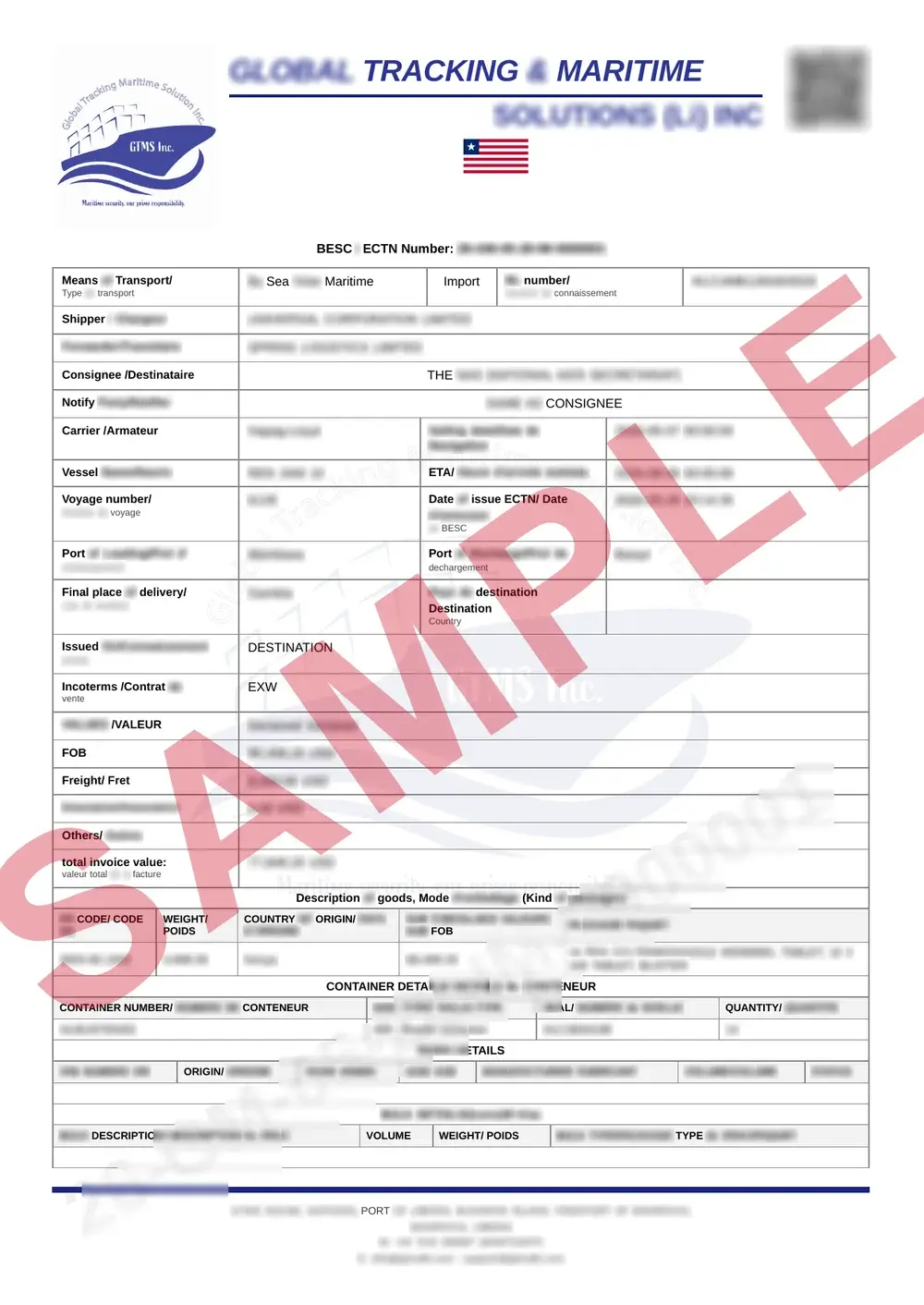














What is Gambia CTN?
The CTN is a mandatory Electronic Cargo Tracking Note (ECTN) required for all sea-freight shipments destined for Gambia. It acts as a pre-shipment tracking and verification document: the destination customs authority uses it to reconcile the shipper, consignee, cargo description and declared invoice values against the Bill of Lading at Banjul. The waiver must be obtained by the shipper or freight forwarder and validated within the destination's filing deadline — some countries require it before the vessel departs, others before it arrives. Presenting a missing, expired or incorrect CTN at destination typically leads to customs clearance delays, storage and demurrage charges, and regulatory fines until a valid certificate is provided.
Official CTN Validation Procedure
According to the customs regulations of Gambia, every cargo shipment purchased from abroad and transported for commercial, business, diplomatic, or personal purposes requires a validated Loading Certificate:
- ▪The shipper or freight forwarder is responsible for obtaining and validating the CTN within the filing deadline set by Gambia — before the vessel departs in some countries, before it arrives in others.
- ▪Prepare the mandatory documents for validation: Bill of Lading, Commercial Invoice, and Freight Invoice.
- ▪Submit the documents to our compliance desk, where a senior officer cross-checks every field against the destination customs requirements.
- ▪Once validated, the CTN certificate is issued and must accompany the shipment for customs clearance at Banjul.
- ▪File the CTN well before the vessel departs — late or post-arrival filing can trigger penalties and cargo-release blocks.
Waiver Regulations & Q&A
What is the Gambia CTN?
The CTN is a compulsory Electronic Cargo Tracking Note (ECTN) for shipments to Gambia. It records loading and invoice details so customs can verify compliance ahead of the destination's filing deadline.
Which documents are required to obtain the CTN?
The core documents are: Bill of Lading, Commercial Invoice, and Freight Invoice. Additional destination-specific paperwork may be requested during validation — our desk confirms the exact list for your shipment.
When must the CTN be issued?
The filing deadline depends on the destination — some countries require the CTN before the vessel departs, others before it arrives. File as early as possible to avoid delays; our desk confirms the exact cut-off for your route.
What happens if cargo arrives without a valid CTN?
Shipments arriving without a validated CTN generally face customs clearance delays, storage and demurrage charges, and regulatory fines until a valid certificate is presented.
Can a validated CTN be modified after issuance?
Once validated, changes are generally restricted. Ensure all weights, values and party details match your cargo manifests and Bill of Lading exactly before submitting.